
The Allegorical Procession of the Church
The Divine ComedyThe elaborate allegorical pageant in the Earthly Paradise representing the history and corruption of the Church.
increasing Bearing strength in each event
 decreasing
Bearing strength in each eventdecreasingThe Seven Candlesticks
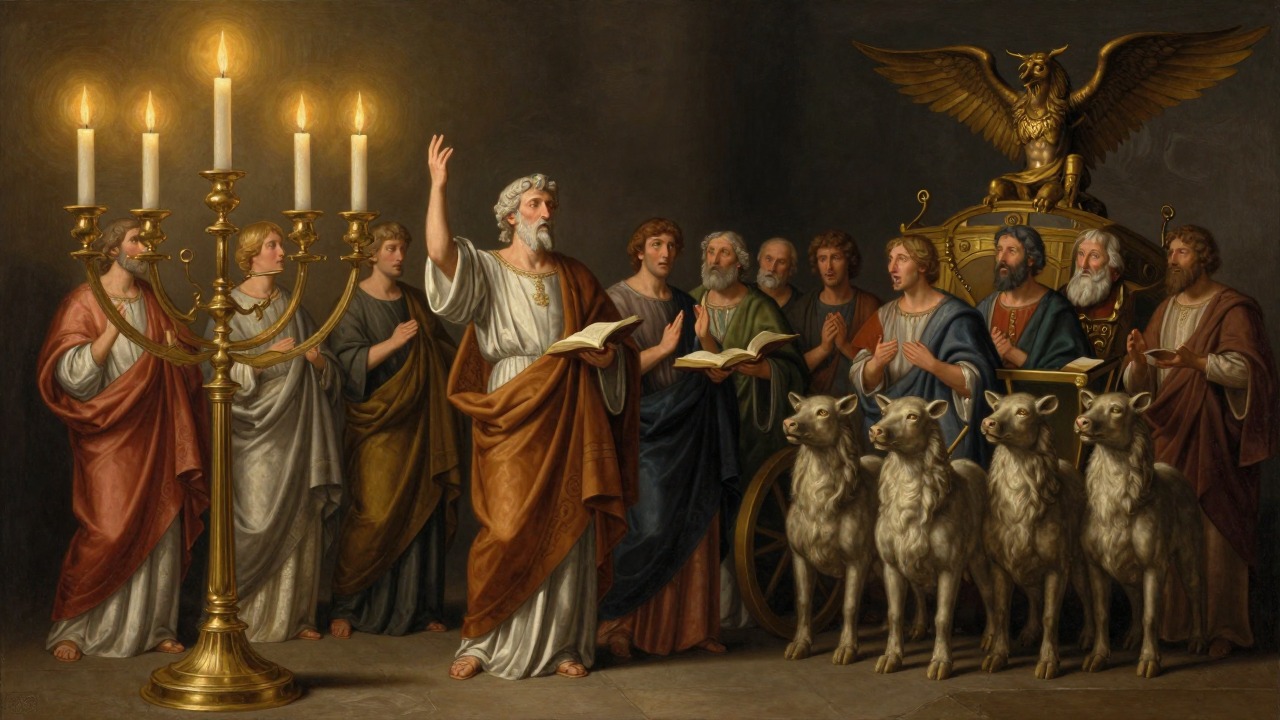
The Lights
The Procession Begins
Dante sees seven golden candlesticks, followed by twenty-four elders (the books of the Old Testament), all singing. Then come four animals (the Evangelists) and a chariot drawn by a Griffin (Christ).
The Symbolism
The candlesticks represent the seven gifts of the Holy Spirit. The elders represent the books of the Bible. The Griffin's two natures symbolize Christ's divinity and humanity.
The Three Theological and Four Cardinal Virtues
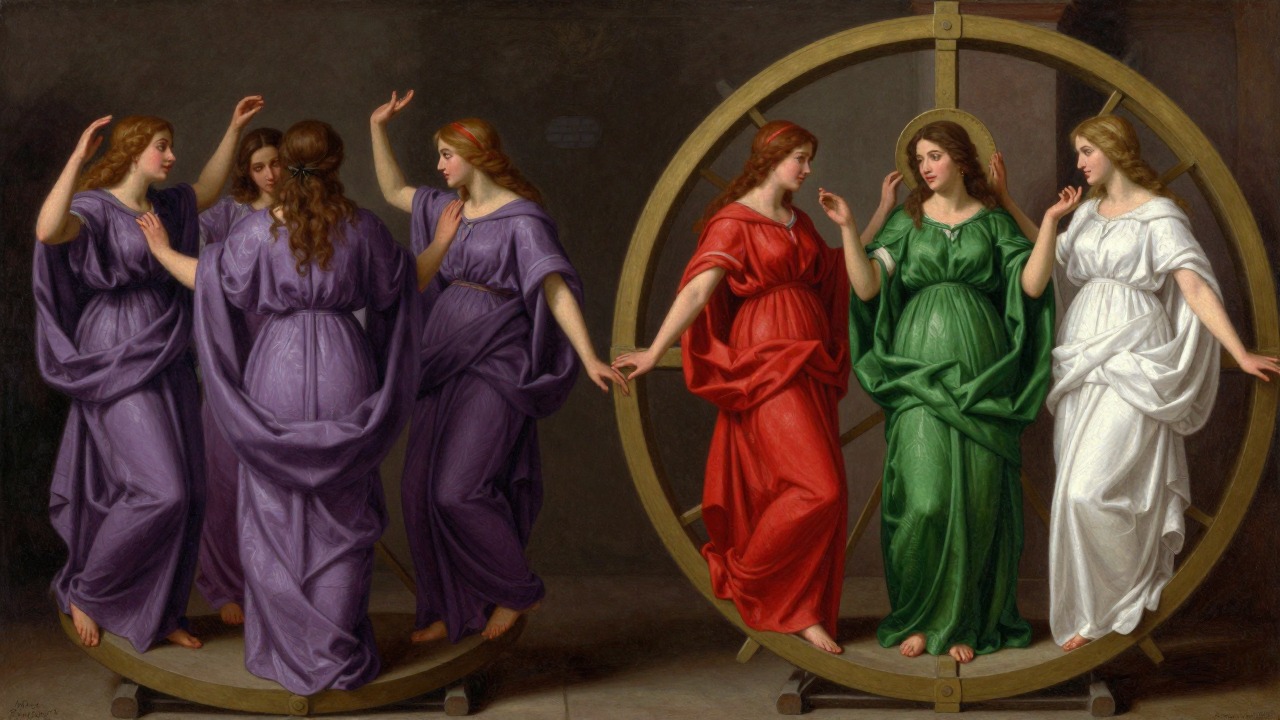
The Dancing Maidens
The Three at the Right Wheel
Three maidens dance at the right wheel: red (Charity), green (Hope), and white (Faith). They represent the theological virtues.
The Four at the Left Wheel
Four maidens in purple dance at the left wheel, representing the cardinal virtues (Prudence, Justice, Fortitude, Temperance). One has three eyes (Prudence).
The Appearance of Beatrice
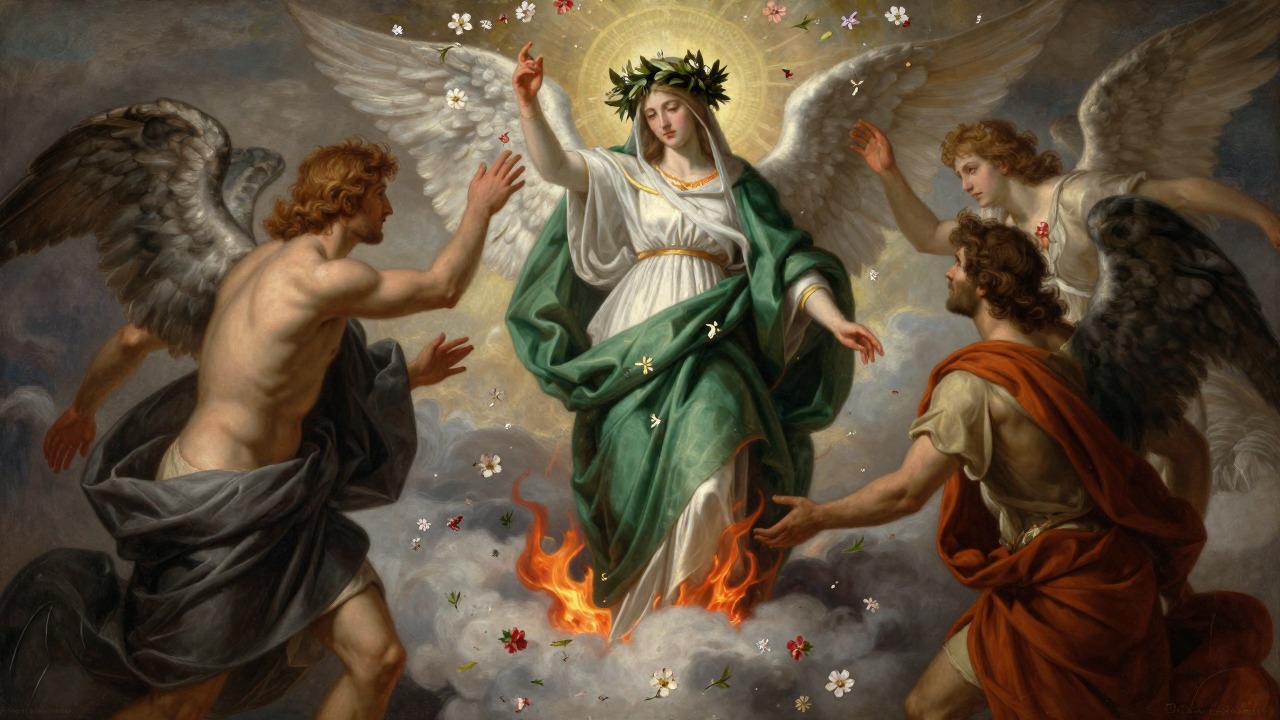
The Lady Descends
The Cloud of Flowers
Angels scatter flowers, and Beatrice appears veiled in white, with an olive crown, green mantle, and fiery robe. She is the embodiment of divine revelation.
The Recognition
Dante feels the power of ancient love and turns to Virgil, but Virgil is gone. Beatrice addresses him sternly, calling him by name.
The Transformation of the Chariot
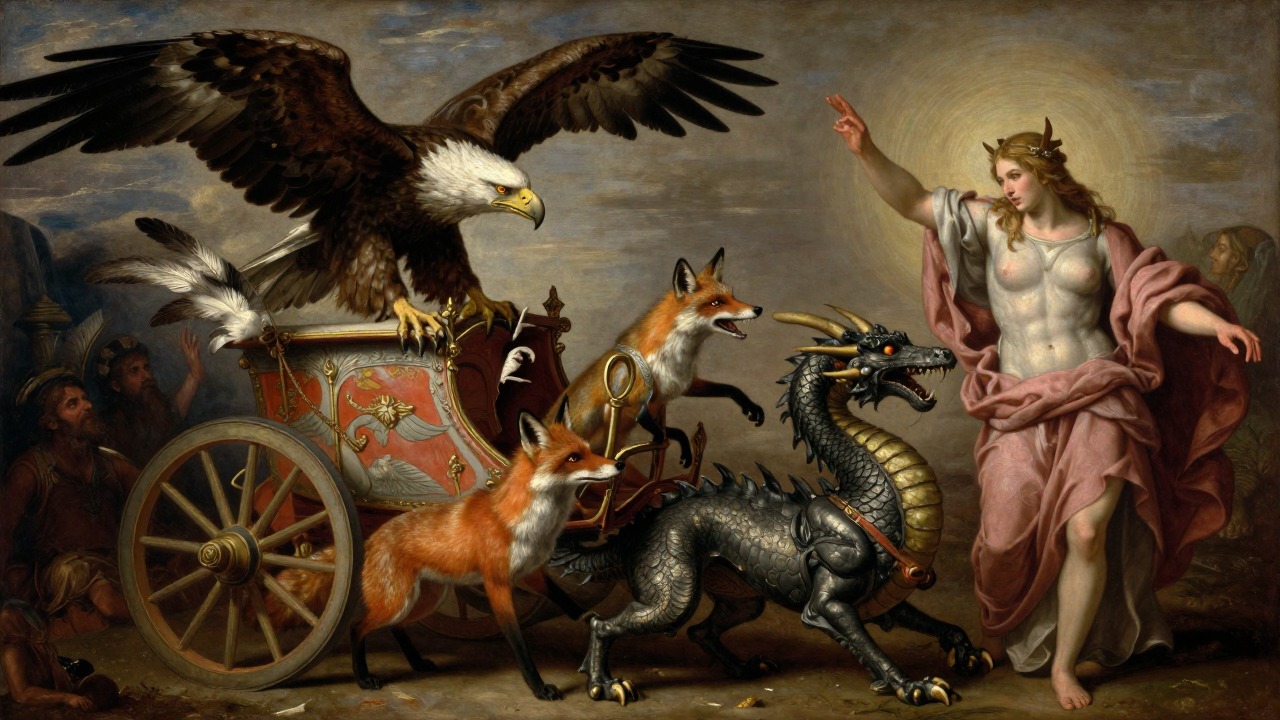
The Allegory of Corruption
The Eagle, Fox, and Dragon
Dante sees an eagle (persecution) strike the chariot, a fox (heresy) leap in, and a dragon (schism) tear it. Then the chariot grows feathers (donation of Constantine) and heads (the seven deadly sins).
The Whore and the Giant
A whore (corrupt papacy) appears on the chariot, and a giant (French monarchy) beats her and drags the chariot away. This allegorizes the Church's captivity in Avignon.
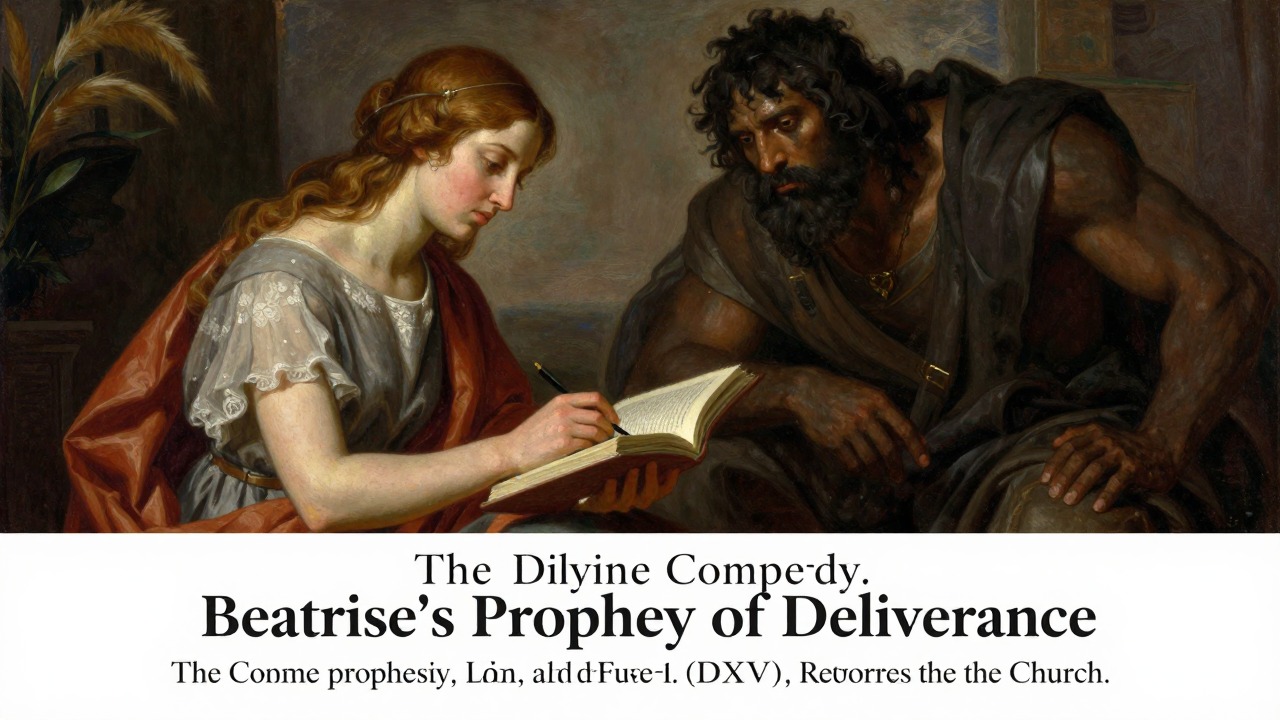
Beatrice's Prophecy of Deliverance
The Promise
The DXV
Beatrice prophesies that a 'Five-hundred, Ten, and Five' (DXV) will come to slay the whore and the giant, restoring the Church. This is a cryptic reference to a future savior.
The Command
She commands Dante to write down what he has seen, for the benefit of the living world. The vision is a warning and a call to reform.
In the Earthly Paradise, after Matilda's explanation
During the procession, in the Earthly Paradise
After the procession, in the Earthly Paradise
After Beatrice's reproach, in the Earthly Paradise
After the transformation, in the Earthly Paradise
